Wood Green
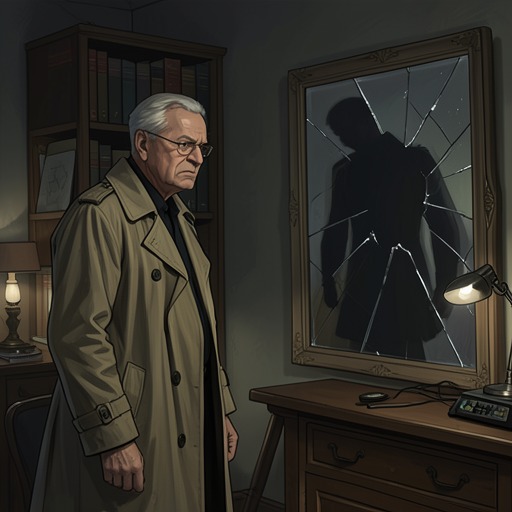
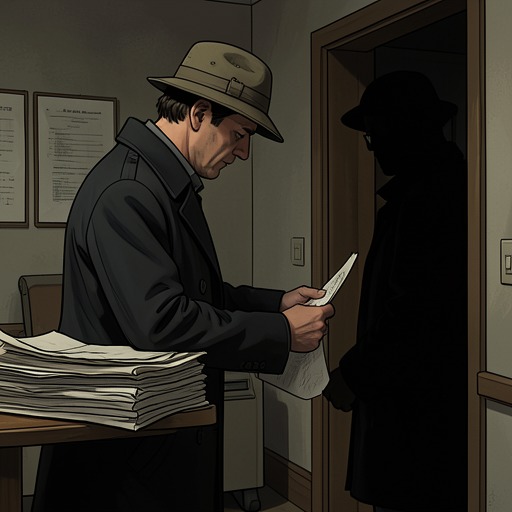
The IPCRESS FileWood Green is the location of the house where the Unnamed narrator is held and subjected to a program of isolation and psychological conditioning. Its importance lies in the contrast between an ordinary London residence and the concealed institution operating inside it: a locked room, controlled routines, and uncertainty about the outside world make the house a prison without the appearance of one. The narrator’s escape interrupts that process, and his later account reveals the methods behind the house’s carefully managed conditions.
Setting and identification
The Unnamed narrator does not recognize the location when he first arrives. He later admits that, although he suspected he might be in a large house in London’s Wood Green, he had no firm knowledge of it at the beginning. As confinement continues, his conviction that London lies nearby gradually fades. He fears that further isolation would leave him unable to imagine anything beyond his cell and his captor, K.K. The location is therefore not simply hidden from him geographically: the narrowing of his sense of place is part of what makes the house effective as a prison.
The house is identified as Mr Keating’s residence, with Alf Keating presenting himself to the narrator as its owner. During the escape, the narrator reaches Keating and claims that he has fled a fight with his drunken, larger brother-in-law after a neighbour called the police. The explanation gives Keating a reason to accept the narrator as someone running from the authorities rather than as an escaped prisoner. Mud on the narrator’s clothes and the borrowed guard’s jacket are visible signs of his flight, but Keating does not uncover the account’s real context. The exchange briefly connects the secret house to the ordinary neighbourhood beyond its grounds.
Confinement and routine
Inside the house, the narrator is kept in a bare room with an earth floor and no furniture. Food is delivered in rough bowls, and K.K. is the person who brings it. The routine is used to compel compliance: the narrator learns that he must repeat the phrases K.K. gives him, and that failure can mean being left without food or a blanket. With time, he stops answering back and concentrates on producing the expected responses. The episodes show how the house’s control works through repeated, simple demands rather than through any need for the prisoner to understand their purpose.
The room also imposes a restricted daily rhythm. The narrator receives instructions about when he may sleep and how he must sleep, while the food and waste pail are taken and returned on a regular schedule. He marks days on the wooden door with his fingernails, keeping his calendar behind the area visible from the peephole. This private record gives him a way to measure time when the house offers few reliable signs of it. He also hears other occupants making distress sounds nearby, an indication that his room is part of a wider system of confinement, though he cannot identify the people or learn what is happening to them.
The ordinary structure of the house becomes part of the escape’s practical difficulty. The old jailer is the one person who sometimes leaves the door open long enough to give the narrator a few minutes to sleep. The narrator considers the possible tools around him, rejects the slop pail as unsuitable, and waits for an opportunity. When the old man later brings him a cigarette, the narrator strikes him with the door and draws him inside, then takes the man’s pencil. He puts on the guard’s jacket and cap over his prison trousers and descends the old wooden stairs. The main entrance is unguarded from the inside, but he decides not to use it; instead, he opens a door into an unlit room. The escape depends on reading the house’s interior and moving through it without attracting attention.
The house as a conditioning system
After escaping, the narrator explains that the Wood Green house was an instance of the so-called haunted-house system. Its central method was mental isolation: false representatives, including supposed ambassadors, could persuade a prisoner that he was alone. A false-police approach was also tried, but was abandoned after a separate incident at Shoreditch led to the accidental apprehension of one of the people involved. Civilian clothing was considered less conspicuous. These details recast the house’s apparent domesticity as operational camouflage, designed to make an organized process seem like an isolated and confusing experience.
The environmental controls served the same purpose. The house had heating and cooling systems that could change the temperature, while lights could be switched to make a day last an hour or a night last thirty-six hours. The narrator describes these alterations as means of unsettling a prisoner’s sense of balance and routine. He connects their effect to physical weakness: fatigue and poor health make it harder to maintain independent judgment. In the room, the repetitive lessons and uncertain rewards give this larger method a daily form. The individual routines are not incidental discomforts but elements in a process intended to make the prisoner increasingly responsive to his captors.
The narrator says the early phase involved severing connections, isolation, physical and mental fatigue, and uncertainty about what would please the captors. He believes that, had he remained, he would probably have been made to memorize long passages of dialect, perhaps including a document concerning his trial. The house’s methods thus extend beyond keeping someone locked away: they seek to shape how a prisoner understands his situation and responds to instruction. His ability to recognize the pattern, and his decision to leave before it progressed further, are central to why his escape matters.
Escape and aftermath
The escape takes place at a point when the narrator believes delay will further erode his understanding of the world beyond the cell. Rather than attempt a direct fight through the house’s main entrance, he uses the guard’s clothing to pass through the interior and then relies on a plausible story to gain help outside. The surrounding garden and Keating’s willingness to accept an explanation provide a route away from the house, but the narrator’s account does not present escape as proof that the conditioning had no effect. He later describes himself as having narrowly avoided being converted by the process.
The old jailer’s later fate further connects Wood Green to a larger network. After the narrator gives an elderly man money and forged British passports at a house near Staines, he drives back to London; the former jailer from Wood Green then takes a plane to Prague. The narrator regards this arrangement as a form of a spy’s insurance. The jailer had enabled moments of sleep but was also the person the narrator had to incapacitate to get out. His departure makes the house’s hidden personnel part of the same clandestine world as the narrator’s escape, rather than leaving the episode sealed off as a private captivity.
Wood Green also becomes a point of comparison when the Unnamed narrator later discusses the operation with Jean. He distinguishes the house-based approach from the use of small private nursing homes, which could avoid conspicuous building work and be returned to ordinary use after the operators left. He says Carswell discovered the nursing-home aspect through his investigation of concens, where fever was induced after patients were brought in to make them physically vulnerable. The comparison clarifies both the specificity and adaptability of the Wood Green method: the house was one setting for a broader operation, not the only kind of place in which its principles could be applied. Later, Painter, a psychiatrist who had helped Raven recover from a partly brainwashed state, is given a room with Carswell at Charlotte Street as the investigation continues. The contrast between the concealed house and this later work underscores the lasting consequence of Wood Green: escape ends the narrator’s confinement there, but exposing and countering the operation remains necessary.